
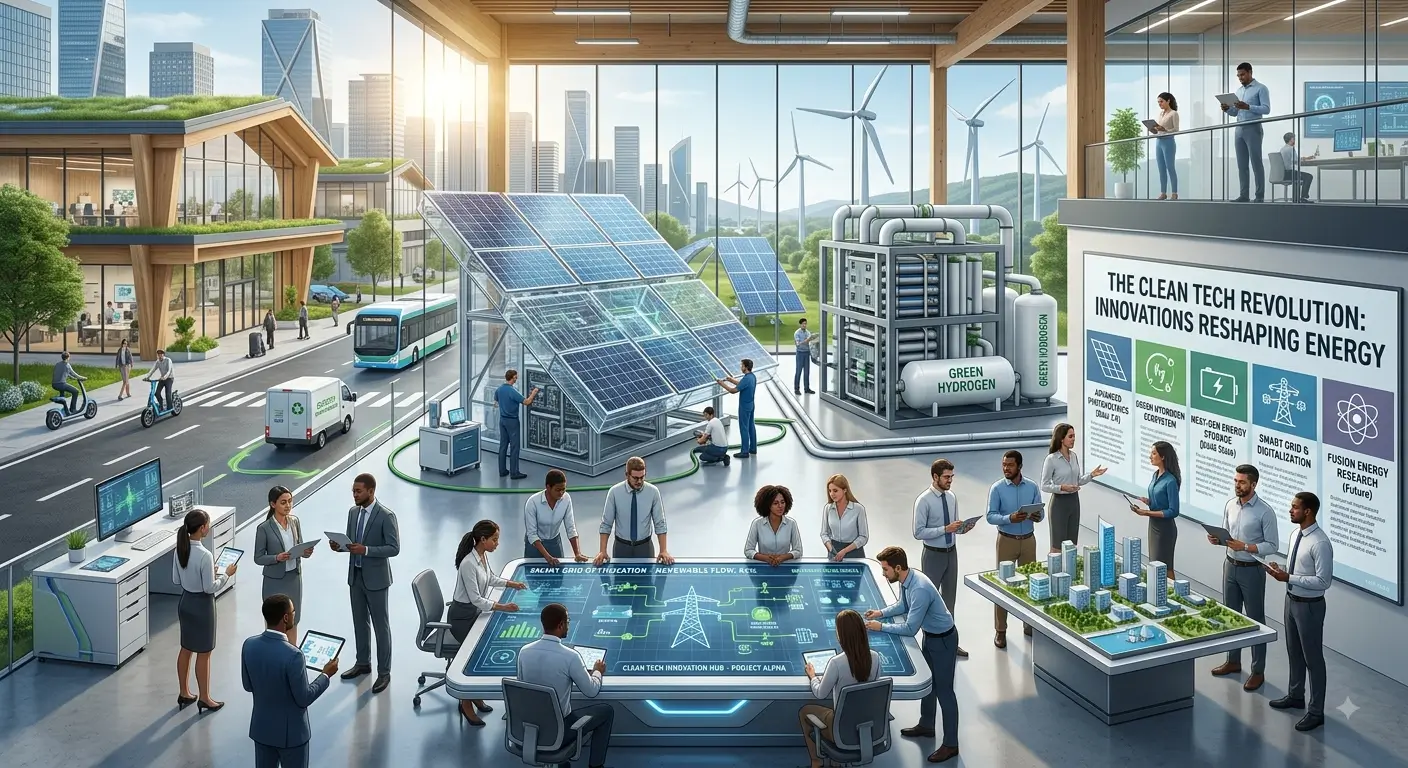
Few areas of technological development carry as much genuine significance for the planet’s future as clean energy innovation, and the pace of progress across this sector has been genuinely remarkable over the past decade, moving numerous technologies from expensive, niche applications into genuinely mainstream, cost-competitive alternatives to conventional fossil fuel-based energy systems.
Understanding where this innovation is genuinely heading — beyond the specific headlines around any single new development — offers valuable insight into how energy systems are likely to continue evolving in the years ahead. This article explores four areas at the forefront of clean energy innovation: advances in renewable energy generation, breakthroughs in battery storage technology, the emerging role of hydrogen and alternative fuels, and the broader shift towards decentralised, more flexible energy grid systems.
Renewable Energy Advances
Renewable energy technology has advanced dramatically over the past decade, with solar and wind power in particular achieving cost reductions that would have seemed genuinely implausible even a relatively short time ago, transforming these technologies from heavily subsidised, niche energy sources into genuinely cost-competitive, and in many markets, the cheapest available options for new energy generation capacity.
Solar technology specifically has benefited from continuous efficiency improvements alongside substantial manufacturing scale increases, driving down costs considerably while improving genuine energy output per unit of installed capacity. Emerging solar technologies, including more efficient panel designs and innovative applications like building-integrated solar and floating solar installations on bodies of water, continue to expand where and how solar power can be practically and cost-effectively deployed, extending well beyond traditional rooftop or dedicated ground-mounted installations alone.
Wind power has seen similarly significant advancement, with larger, more efficient turbine designs and continued growth in offshore wind capacity, which offers access to more consistent, powerful wind resources than most onshore locations can typically provide, even though offshore installation and maintenance costs remain genuinely higher than onshore alternatives. Continued innovation in offshore wind technology, including floating turbine designs that can access deeper water locations previously unsuitable for traditional fixed-foundation turbines, continues to expand the genuine practical potential of this energy source considerably.
Battery Storage Breakthroughs
Energy storage represents one of the most critical, and historically challenging, pieces of the broader clean energy transition, given the inherently variable nature of renewable energy generation and the genuine need for effective storage solutions to reliably balance energy supply with demand, particularly as renewable energy sources represent a growing overall share of total energy generation.
Lithium-ion battery technology, already well established through its widespread use in electric vehicles and consumer electronics, has continued to see meaningful cost reductions and performance improvements, making large-scale battery storage increasingly viable and genuinely cost-effective for grid-level energy storage applications, not simply smaller-scale consumer applications alone. Beyond continued incremental lithium-ion improvement, several genuinely promising alternative battery technologies are advancing through development, including solid-state batteries offering potentially significant safety and performance advantages, and various flow battery designs particularly well suited to larger-scale, longer-duration grid storage applications where lithium-ion technology faces genuine practical limitations.
Beyond battery technology specifically, alternative energy storage approaches continue to see genuine innovation as well, including pumped hydro storage, compressed air storage, and various other mechanical and thermal storage approaches, each offering distinct advantages for specific applications and use cases. This diversifying storage technology landscape offers genuine promise for addressing one of the most significant remaining technical challenges within the broader clean energy transition, an area where continued innovation carries substantial implications for how quickly and effectively energy systems can genuinely transition away from fossil fuel dependence.
Hydrogen and Alternative Fuels
Hydrogen has attracted growing attention as a potential clean energy carrier, particularly for applications where direct electrification faces genuine technical or practical limitations — certain heavy industrial processes, aviation, and long-distance shipping among the most commonly cited examples where hydrogen or hydrogen-derived fuels may offer genuine advantage over direct electrification approaches.
Green hydrogen specifically, produced using renewable electricity to split water through electrolysis, offers a genuinely low-carbon hydrogen production pathway, though current production costs remain meaningfully higher than conventional hydrogen production methods that rely on fossil fuel-based processes, representing a genuine and significant challenge for achieving the cost competitiveness needed for widespread green hydrogen adoption at meaningful scale. Continued technological innovation and manufacturing scale increases are gradually helping to narrow this cost gap, though genuine, substantial further progress remains needed before green hydrogen achieves the kind of broad cost competitiveness that renewable electricity generation has already substantially achieved.
Beyond hydrogen specifically, various other alternative and synthetic fuel technologies continue to see genuine development, particularly relevant for specific applications like aviation, where the practical limitations of battery-electric approaches remain genuinely significant given current battery energy density limitations relative to the specific demands of flight. This growing, increasingly diverse array of alternative fuel options offers meaningful potential for addressing some of the more genuinely challenging aspects of the broader clean energy transition, particularly across specific sectors where direct electrification alone faces genuine practical or technical constraints.
Decentralised and Smart Energy Grids
Beyond individual generation and storage technologies, the broader structure of energy grid systems themselves is undergoing significant, genuine transformation, moving away from traditional, centralised generation and distribution models towards more decentralised, flexible systems better suited to accommodating distributed renewable energy generation at genuine scale.
Smart grid technology, incorporating advanced sensors, real-time data analysis, and increasingly sophisticated automated control systems, allows for considerably more responsive, efficient energy grid management, better able to accommodate the genuine variability inherent to renewable energy generation while maintaining reliable, consistent energy supply for consumers. This technological evolution connects closely to broader household-level energy management as well, with growing numbers of homes incorporating their own local generation and storage capacity, contributing to a genuinely more decentralised overall energy system, an area where thoughtful sustainable home upgrades increasingly play a meaningful role in the broader energy transition, not simply representing isolated individual choices disconnected from this larger systemic shift.
This broader shift towards more decentralised, technologically sophisticated energy systems also carries significant implications for how businesses and investors think about energy infrastructure investment more broadly, with growing recognition that genuine business and investment strategy increasingly needs to account for this fundamental, ongoing transformation of energy systems, rather than treating energy transition purely as an environmental policy consideration separate from core, mainstream business and investment strategy and planning.
The clean tech revolution represents genuine, substantial technological progress across multiple interconnected fronts simultaneously, moving well beyond any single breakthrough technology towards a genuinely comprehensive transformation of how energy is generated, stored, and distributed. As this innovation continues to mature and scale, its cumulative impact on both environmental outcomes and broader economic systems will likely prove considerably more significant than any single specific technological development taken in isolation.