
Beyond clean energy generation specifically, a broader transformation is underway across design and engineering more generally, as sustainability considerations increasingly shape how products, buildings, and entire cities are conceived and constructed from the outset, rather than sustainability being treated as an afterthought or compliance requirement layered onto otherwise conventional design and engineering approaches.
This shift reflects growing recognition that genuinely addressing environmental challenges requires rethinking fundamental design and engineering principles, not simply improving efficiency within existing, largely unchanged approaches and systems. This article explores four areas at the forefront of this broader transformation: circular design principles, advances in sustainable materials science, the development of smarter, more sustainable cities and infrastructure, and the emerging role of artificial intelligence in supporting broader sustainability goals.
Circular Design Principles
Circular design represents a fundamental rethinking of how products and systems are conceived, moving away from the traditional linear “take, make, dispose” model that has dominated industrial design for generations, towards approaches specifically designed to keep materials and products in genuine, productive use for as long as possible, minimising waste and resource extraction considerably in the process.
This shift manifests in several genuinely distinct but interconnected ways. Design for longevity and genuine repairability represents one significant dimension, with growing numbers of manufacturers reconsidering product design specifically to extend genuine useful lifespan and make repair considerably more practical and accessible than in previous product generations often deliberately designed with more limited lifespans in mind. Design for genuine disassembly and material recovery represents a further significant dimension, with products increasingly designed from the outset to be more easily taken apart at the genuine end of their useful life, allowing valuable materials to be more effectively recovered and reused rather than simply discarded entirely.
Beyond individual product design, circular economy principles are increasingly being applied at a broader systems level, with growing numbers of businesses developing genuine take-back schemes, product-as-a-service models, and other innovative approaches specifically designed to keep materials circulating productively within the economy for considerably longer, rather than following the traditional linear path towards eventual landfill disposal. This broader systemic shift represents one of the more genuinely significant developments within sustainable design and engineering more broadly, extending well beyond individual product improvements towards fundamentally rethinking how entire economic and material systems are structured and function.
Advances in Sustainable Materials Science
Materials science has seen genuinely significant innovation specifically aimed at developing more sustainable alternatives to conventional, often resource-intensive or environmentally harmful materials, spanning everything from construction materials to packaging to advanced technical applications across numerous industries.
Bio-based materials, derived from renewable biological sources rather than fossil fuels, have seen particularly significant development, with innovations spanning everything from mushroom-based packaging alternatives to advanced bio-based plastics and composites offering genuine performance comparable to conventional alternatives, while substantially reducing associated environmental impact. Similarly, significant innovation continues in developing genuinely lower-carbon alternatives to particularly resource and emissions-intensive conventional materials like cement and steel, given their substantial contribution to overall global emissions and the genuine scale of ongoing global construction and infrastructure development that continues to rely heavily on these particular materials.
Recycled and upcycled materials have also seen considerable advancement, with improving processing technology increasingly allowing recycled materials to achieve genuine performance characteristics comparable to virgin materials across a growing range of applications, addressing what has historically been a significant, genuine limitation constraining broader recycled material adoption across numerous industries and applications. This continued advancement in sustainable materials science offers considerable promise for meaningfully reducing the substantial environmental footprint associated with material production and use across nearly every sector of the broader economy.
Smart Cities and Sustainable Infrastructure
Urban environments house a growing majority of the global population, making genuinely sustainable city design and infrastructure development an increasingly critical, high-leverage area for broader environmental progress, given the sheer scale of resource use and emissions associated with urban environments collectively.
Smart city technology, incorporating sensors, real-time data analysis, and increasingly sophisticated automated systems, offers considerable potential for improving urban resource efficiency across multiple interconnected dimensions simultaneously — optimising energy use, improving genuine transportation efficiency, and reducing water waste, among numerous other significant potential applications. These technologies work most effectively when genuinely integrated thoughtfully into broader urban planning, rather than applied as isolated, disconnected technical solutions layered onto otherwise unchanged, conventional urban infrastructure and design approaches.
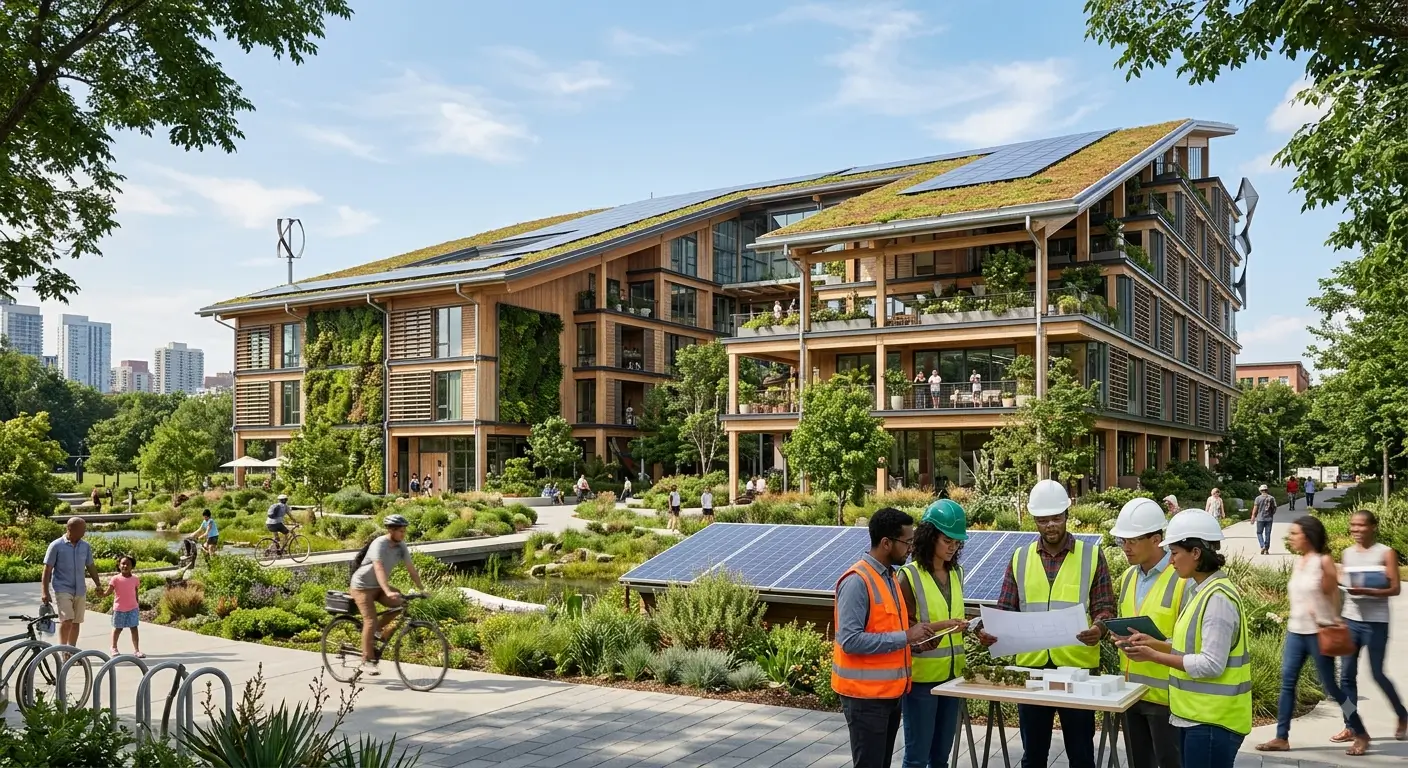
Sustainable infrastructure development extends well beyond specifically smart technology applications alone, encompassing broader principles like genuinely mixed-use urban development that meaningfully reduces transportation needs, sustainable urban drainage systems designed to work with, rather than against, natural water cycles, and green infrastructure that thoughtfully integrates natural systems directly into the urban environment itself. This kind of genuinely holistic approach to sustainable urban development increasingly requires close collaboration between engineers, urban planners, and policymakers, reflecting the genuinely interconnected, systemic nature of the challenges and opportunities involved in building truly sustainable cities for the future.
Artificial Intelligence in Service of Sustainability
Artificial intelligence has emerged as an increasingly powerful, genuinely versatile tool supporting sustainability goals across numerous, quite different applications, from optimising energy systems to supporting more effective environmental monitoring and conservation efforts more broadly.
In energy systems specifically, AI-powered optimisation is increasingly used to improve the efficiency of everything from individual building energy management to broader, grid-scale energy distribution, using sophisticated real-time data analysis to identify genuine efficiency improvements that would be genuinely impractical to achieve through traditional, non-AI-assisted management approaches alone. Similarly, AI applications in materials science and product design are increasingly being used to accelerate the genuine discovery and development of new sustainable materials and more efficient product designs, meaningfully speeding up innovation cycles that would otherwise require considerably more extensive traditional research and development timelines.
Beyond these more technical applications, AI is increasingly supporting broader environmental monitoring and conservation efforts as well, with machine learning models increasingly used to analyse satellite imagery for deforestation tracking, support biodiversity monitoring, and improve climate modelling accuracy, among numerous other genuinely valuable environmental applications. This growing intersection between advanced technology and genuine sustainability goals increasingly represents a significant area of interest for forward-thinking businesses and investors specifically looking to support and benefit from this broader technological and environmental transformation, recognising the substantial, growing economic opportunity inherent in developing and deploying genuinely effective sustainability-focused technology solutions at meaningful scale.
This broad, interconnected wave of innovation across circular design, sustainable materials, smart infrastructure, and AI-powered sustainability applications reflects a fundamental, ongoing shift in how we approach the genuine challenge of building a more sustainable future, one that increasingly demands serious consideration from investors and financial institutions specifically evaluating where genuine long-term value and impact are most likely to emerge across this rapidly evolving, increasingly significant sector of the broader economy.
Sustainable design and engineering innovation, taken together across these interconnected areas, represents genuine cause for cautious optimism regarding our collective ability to address pressing environmental challenges through genuine technological and systemic transformation. As these various technologies and approaches continue to mature and scale, their cumulative, combined potential to reshape how we build, manufacture, and live sustainably continues to grow considerably more significant with each passing year.